In Spain’s competitive hotel market, fragmentation is the norm — and independent hotels dominate the landscape. Against this backdrop, conversion brands are emerging as a powerful strategic tool for property owners. With up to 85% of Spanish hotels considered suitable for repositioning, and the operational and commercial upside that comes with it, major international groups are now pushing conversion brand concepts deeper into the market, including its largest segment: economy hotels.
A fragmented market serving a global audience
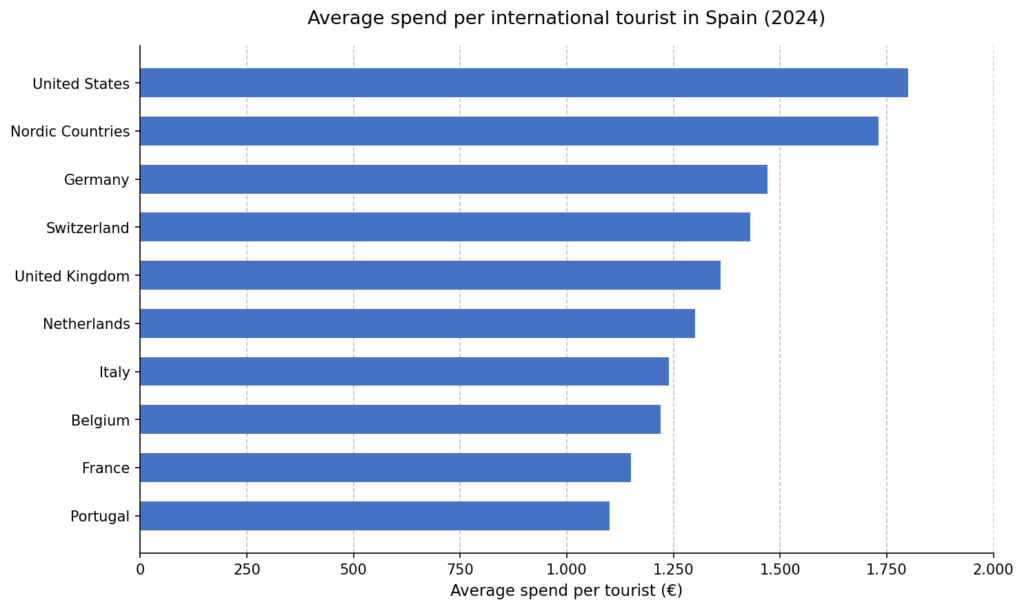
According to the National Statistics Institute (INE), Spain has 16,778 registered hotel properties. Around 73.4% are unaffiliated with any chain (Hosteltur), and an estimated 85% have no connection to a global brand. Yet the guests driving the highest spend in Spain are international travelers. Closing that gap — connecting independent properties to a global audience — is both a commercial opportunity and a strategic imperative for much of Spain’s hotel supply.
Source: EGATUR
What is a conversion brand, and why does this concept matter so much?
Conversion brands give independent hotels a faster, more flexible route into a global group’s ecosystem through an streamlined franchise model. Established examples include Mercure Hotels (Accor) and Curio Collection by Hilton — both brands we have worked with on multiple projects at PHG Hotels & Resorts. But the real momentum right now is coming from brands built from the ground up for existing economy properties: Spark by Hilton and Four Points Flex by Sheraton (Marriott International) are the standout examples. Spark targets the largest slice of the Spanish market — economy hotels of 3-stars or below, which account for 46.36% of all hotel rooms and 79.51% of all hotel properties in Spain. Four Points Flex sits a notch above, but remains firmly economy-oriented.
Mid-sized cities: an untapped opportunity
International brand rollouts have historically clustered around Spain’s most established tourism destinations. But there is a compelling case for the 70 mainland Spanish cities with populations above 100,000. Many are sitting on underserved international demand, and a global brand affiliation could be exactly the catalyst needed to unlock it.
What owners stand to gain
In a market where efficiency and international demand capture are no longer optional, conversion brands offer a credible, proven path for independent hotels to compete with the major groups.
But getting it right requires more than signing a franchise agreement.
Choosing the right brand, negotiating the right terms, adapting the product without unnecessary cost, and managing the operational integration all demand experience, market knowledge, and clear strategic thinking.