Hotel Management Agreements (HMAs)
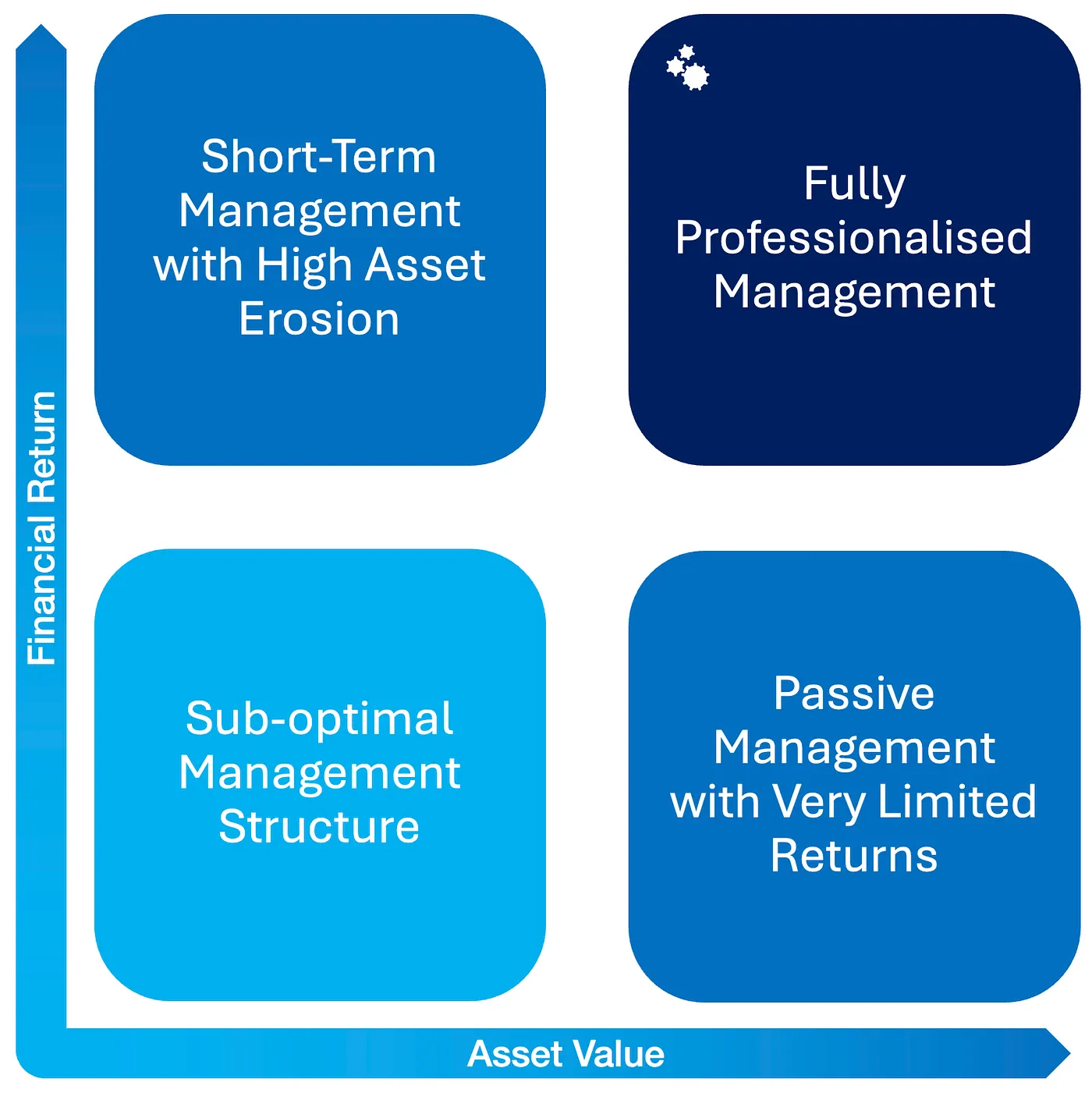
HMAs are the preferred structure for sophisticated hotel management companies seeking to deliver operational excellence without assuming asset-related financial risk. Under an HMA the owner retains full exposure to the P&L while delegating all management responsibilities to an expert operator that may leverage its own brand or a third-party brand.
Either directly, or through an asset management firm, the owner can exert a significant degree of control over the operator’s performance. When the HMA has been properly negotiated by a specialist legal advisor, operator and owner interests can be substantially aligned.
The operator fees are variable and come mostly from total revenue and GOP results, incentivising the operator to drive results.
Franchise contracts
The big distinction here is in the nature of the contract. While the HMA is a service provision contract, the franchise model is a commercial contract for the licensed use of intellectual property: brand, systems, standards, know-how and/or operational methods.
In this model, the owner retains full control of the operation and full P&L exposure. The brand provides powerful tools to the owner to grow commercial performance, but extracting value from these tools is entirely the owner’s responsibility (or the appointed management company). This applies to any aspect of the operation including sales & marketing, PR, training, IT tools, F&B guidance, etc.
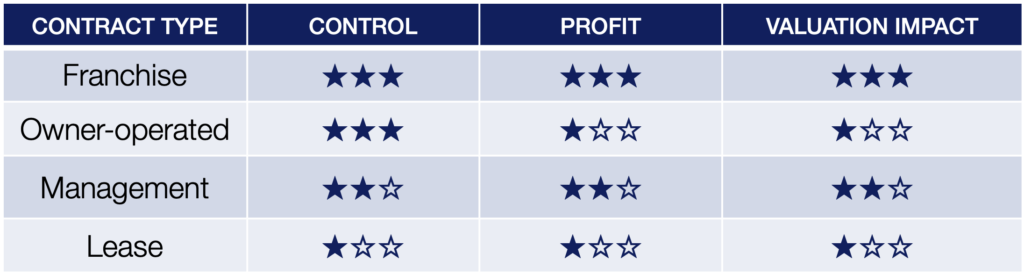
When executed effectively, the combination of strict cost control and brand-driven top-line performance can deliver maximum profitability and asset valuation potential, most of the times outperforming other contract models in terms of GOP margins.
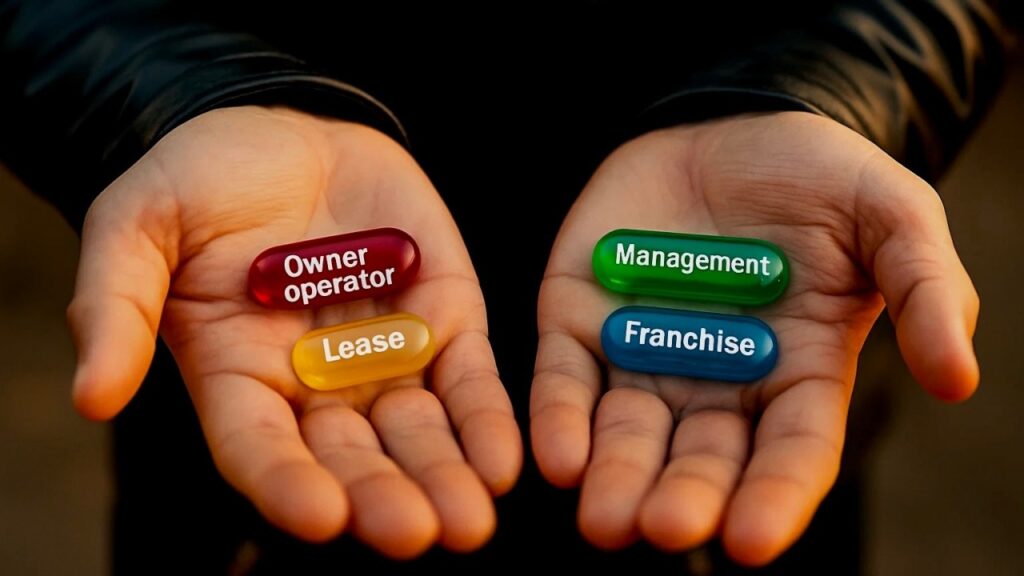
So, ultimately, selecting the right hotel contract type depends on the owner’s priorities regarding:
- – expected returns,
-
- – risk appetite,
-
- – desired level of operational control
-
- – and asset valuation objectives.
Understanding these dynamics is the key to selecting the contract format that will maximise the long-term performance and value of a particular hotel asset.